
The DKU Mandatory Class Observation provides a structured, evidence-based view of teaching practice to support faculty tenure, reappointment, and promotion reviews. It is one component of a broader evaluation of teaching effectiveness and is designed to complement other sources of evidence.
The observation rubric is informed by DKU’s Teaching and Mentoring Effectiveness Framework, which describes seven complementary dimensions of effective teaching and mentoring:
Other dimensions, such as Reflect and Mentor and Advise, may be more appropriately considered through evidence beyond a single class session.
A class observation is a snapshot of one class session, not a comprehensive evaluation of an instructor’s teaching. Observers consider the context of the course and the evidence available during the observation.
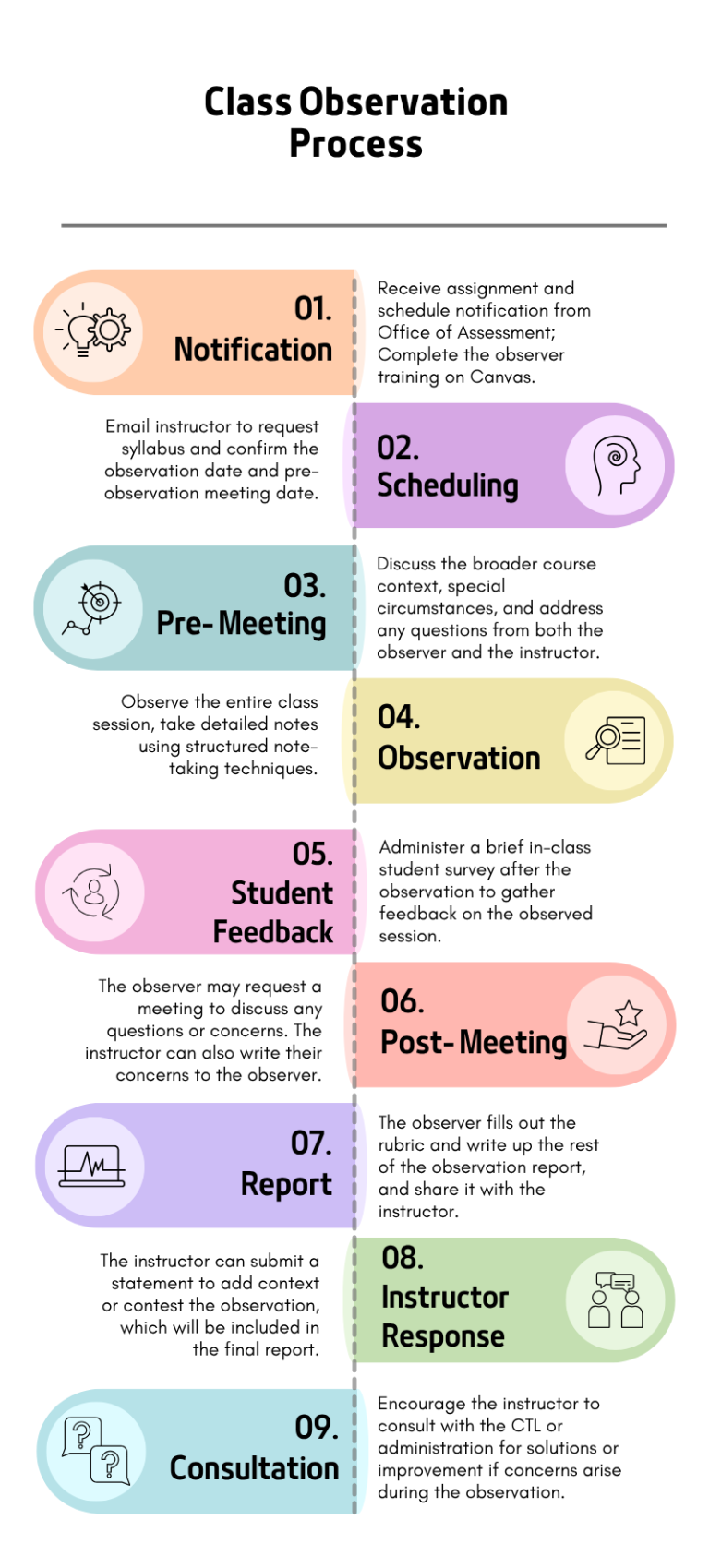
The process is designed to document teaching practices consistently while recognizing that effective teaching can take many forms. The observation report does not produce a single overall teaching score; ratings and narrative evidence are considered together and in context.
Contact: Center for Teaching and Learning
Faculty may also participate in a formative class observation to receive developmental feedback outside of formal personnel reviews. These observations can be facilitated by peer faculty or the Center for Teaching and Learning (CTL).